Dr. Claytor Answers Top Renuvion Skin Tightening Questions
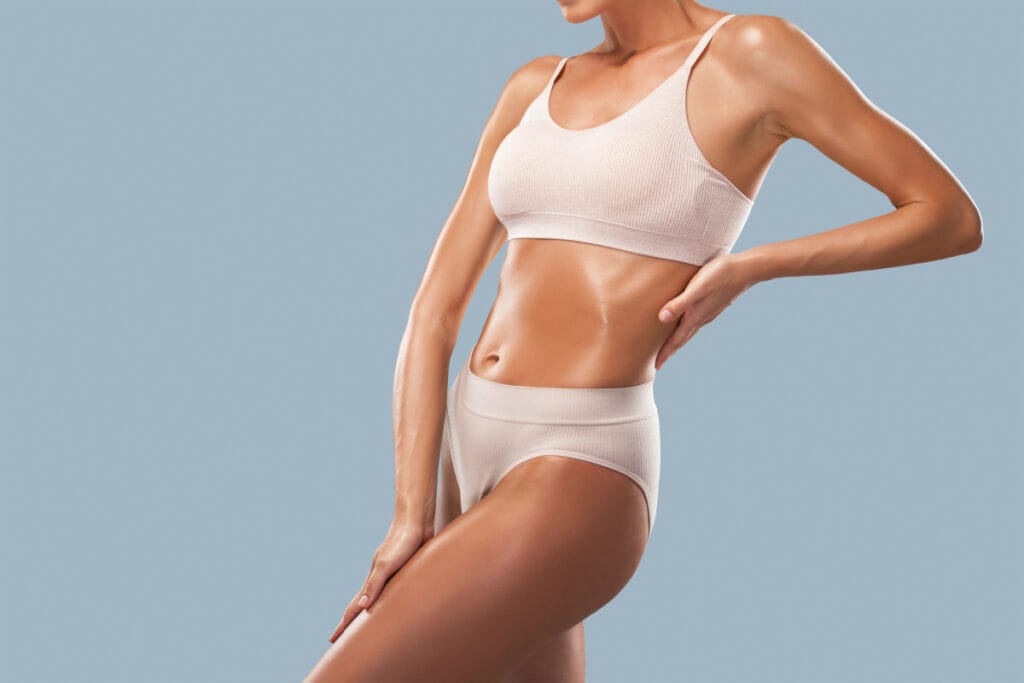
Loose skin left behind after fat loss doesn’t respond to diet, exercise, or time. The fat is gone, but the skin that stretched to hold it stays stretched. That gap is exactly what Renuvion skin tightening closes, and R. Brannon Claytor, MD, FACS, now performs it alongside fat removal on the AYON™ Body Contouring System in a single visit. If you’re researching Renuvion recovery, results, and candidacy ahead of a consultation with our Philadelphia-area body contouring surgeon, the questions below cover what most patients want answered before they book.
How long is recovery after Renuvion and AYON?
Plan to dedicate the first several days to recovery: swelling, bruising, and soreness in the treated area are normal and expected. Most patients step away from work for a few days; the face and neck can call for closer to two weeks before results are ready for the public eye, since that area shows swelling more visibly than the abdomen or flanks.
Recovery generally moves through a few stages:
- First few days: Swelling, bruising, and soreness are normal. Rest and compression garments matter most here.
- End of week one: Most patients are comfortable returning to desk work and light daily activity.
- Two weeks: Bruising has largely resolved. The face and neck typically need this full two weeks before results are camera-ready, since that area shows swelling more visibly than the abdomen or flanks.
- One to two months: Initial tightening becomes visible as swelling fully resolves.
Because Renuvion triggers new collagen production rather than just an immediate mechanical pull, the tightening effect continues to build for six to nine months after the swelling is gone. Results vary by patient, and Dr. Claytor sets activity restrictions individually based on the areas treated and whether liposuction was performed alongside Renuvion.
Can Renuvion be performed alone without AYON or liposuction?
Yes. Renuvion tightens skin on its own when a patient has minimal to moderate laxity and little or no fat to remove. AYON becomes the better fit when fat removal and skin tightening are both needed, since it lets Dr. Claytor perform ultrasound-assisted liposuction and Renuvion through the same incisions in one operating room visit instead of staging them across two appointments. Dr. Claytor determines which approach fits your anatomy during a consultation, based on how much excess fat is present alongside the loose skin.

“Dr. Claytor is incredibly professional, knowledgeable, and clearly an expert in his field. He took the time to answer every question I had, made sure I felt comfortable with every decision, and genuinely listened to my goals. What impressed me the most was how caring, compassionate, and understanding he was throughout the entire process. I never felt rushed and always felt like I was in the best hands.””
Will Renuvion and AYON leave visible scars?
The Renuvion wand and the AYON liposuction cannula both enter through incisions about the width of a pencil eraser. These incisions are small enough that they typically fade to be barely noticeable, and Dr. Claytor places them in inconspicuous locations whenever the treatment area allows it.
How does Renuvion compare to a surgical body lift?
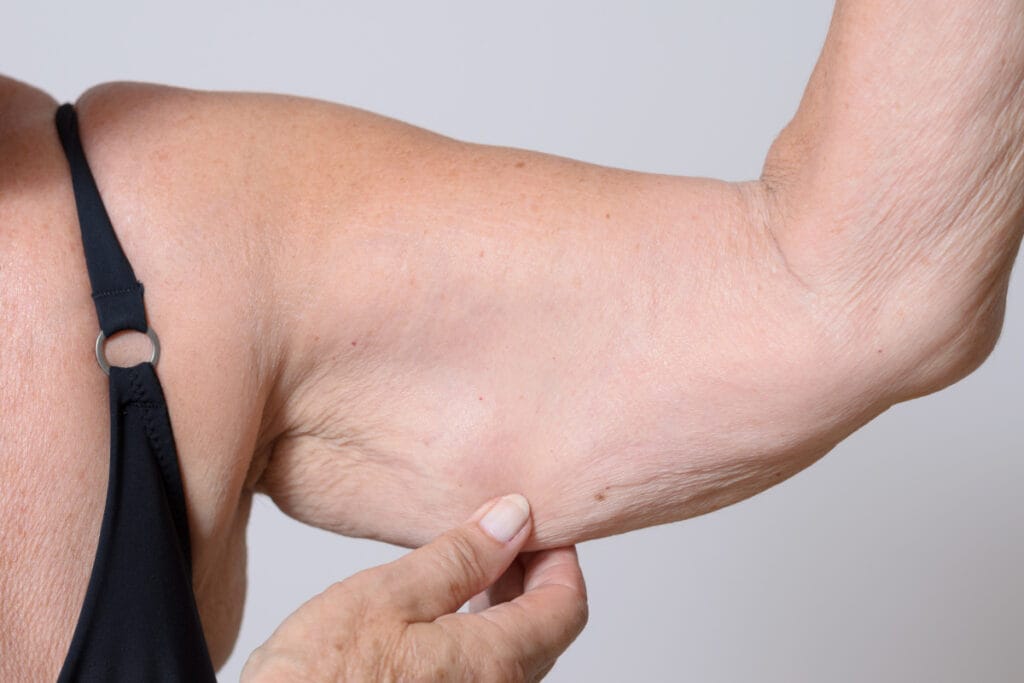
A tummy tuck, arm lift, or body lift removes more skin through longer incisions and carries a longer recovery. For patients with mild to moderate laxity, Renuvion and AYON reach beneath your skin’s surface without those longer incisions. When the amount of excess skin exceeds what energy-based contraction can address, Dr. Claytor recommends the appropriate lift procedure instead.
How is Renuvion different from Morpheus8 or other RF skin-tightening treatments?
Both use radiofrequency energy, but they deliver it differently and are built for different degrees of laxity.
- Morpheus8 is a topical procedure that uses an array of tiny needles to deliver RF energy to adjustable depths in the skin, and most patients need a series of sessions to see meaningful improvement in mild laxity or texture.
- Renuvion delivers radiofrequency energy and helium plasma through a single small incision, treating a broader area of tissue in one procedure, and is built for moderate laxity that a series of needle-based sessions is not able to address.
Dr. Claytor recommends Morpheus8 for patients seeking skin refinement with minimal downtime, and Renuvion for patients with enough looseness that a single, more comprehensive treatment is the better fit.
Renuvion contracts loose skin beneath the surface using radiofrequency and helium plasma, treating everything from the neck and jawline down to the abdomen, arms, and thighs.
How does Renuvion compare to Sofwave?
Sofwave is a non-surgical skin tightening procedure which uses focused ultrasound energy to heat the mid-dermis without any incisions or needles, and most patients need only one or two sessions to see results develop gradually over about 12 weeks. It is a fully non-invasive option that works well for mild to moderate laxity on the face, neck, abdomen, arms, and thighs. Renuvion takes a more direct approach: energy is delivered beneath the skin through a single small incision in one procedure, reaching further than an external ultrasound device can for patients with more noticeable looseness.
For patients who want a no-downtime option, Sofwave is the right starting point. For those whose skin needs more than surface-level heating, Renuvion is what Dr. Claytor typically recommends instead.
Can Renuvion and AYON address loose skin after GLP-1 weight loss?
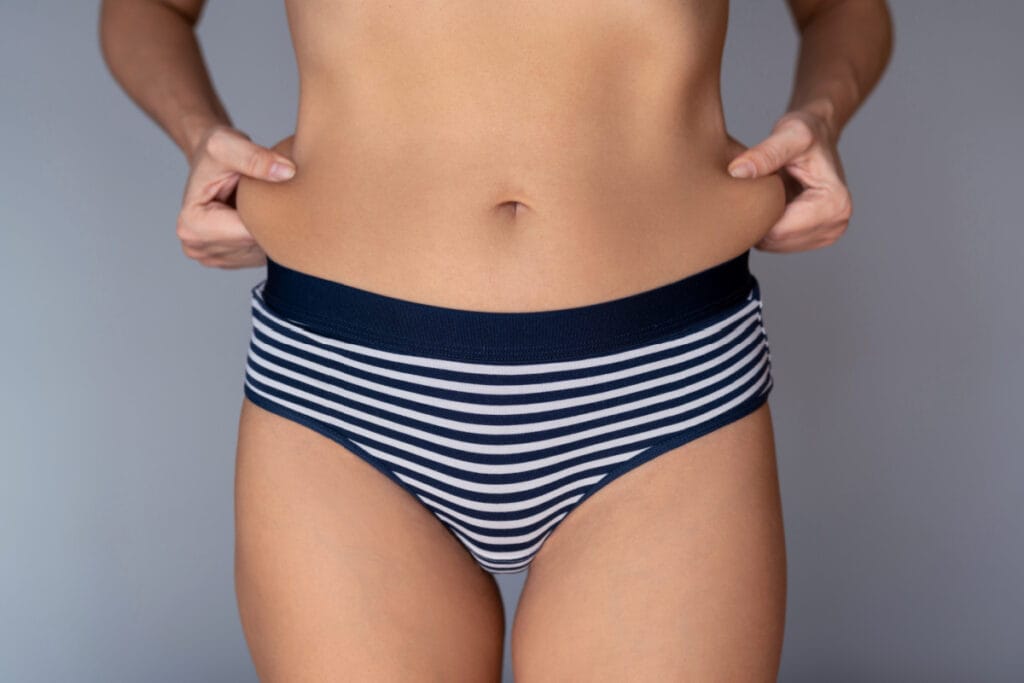
Yes, and people who find they’ve been left with excess skin post-significant weight loss are often excellent candidates for Renuvion. Medications like Ozempic and Wegovy remove fat quickly, often faster than the skin can adapt, which leaves behind laxity that diet and exercise cannot reverse on their own. Renuvion contracts that loose tissue directly, and AYON lets Dr. Claytor pair it with fat removal in the same visit for patients who still have stubborn fat alongside the loose skin.
Candidacy for this procedure (i.e. instead of a tummy tuck) depends on skin elasticity and the amount of excess skin present, which Dr. Claytor evaluates during a consultation.
Does insurance cover Renuvion or AYON?
No. Insurance classifies Renuvion and AYON as cosmetic procedures, since they improve the appearance of loose skin rather than treat a documented medical condition. This holds even when the loose skin developed after significant weight loss, including weight lost through GLP-1 medications. Patients exploring financing options can ask Dr. Claytor’s office directly about available payment plans during a consultation.
Is Renuvion safe?
Yes, when performed within its FDA-cleared indication by an experienced surgeon. That qualifier matters here more than with most procedures, so it’s worth understanding why.
In March 2022, the FDA issued a safety communication flagging serious complications, including burns and a small number of life-threatening events, tied to aesthetic use of Renuvion. At that time, the device’s clearance covered general soft tissue cutting and coagulation during surgery, not aesthetic skin tightening specifically. Apyx Medical has since obtained FDA 510(k) clearance for Renuvion’s use in tissue contraction following liposuction, the same indication built into the AYON Body Contouring System. That is the specific, on-label use under which Dr. Claytor performs the procedure.
Provider experience is essential to a safe, positive experience. Renuvion delivers real energy beneath the skin, and handling that precisely takes dedicated training, not just general surgical experience. Choosing a board-certified plastic surgeon with specific, hands-on experience performing Renuvion is key, so be sure to ask your provider directly about their experience during your consultation.
What anesthesia is used for Renuvion and AYON procedures?
Dr. Claytor performs Renuvion and AYON procedures under local or general anesthesia, decided together with each patient based on the treatment plan. The number and size of areas being treated, and whether Renuvion is paired with liposuction on the AYON system, both factor into that decision. This is a conversation Dr. Claytor has directly with each patient during the consultation.
How soon will I see results, and how long do they last?
Initial tightening becomes visible once swelling subsides, typically within the first one to two months. Results continue to improve as new collagen forms, with most patients reaching their final result between six and nine months after treatment. Because Renuvion works by triggering genuine tissue remodeling rather than a temporary mechanical effect, the improvement holds well beyond that window for most patients. Results vary by patient, and maintaining a stable weight afterward helps preserve them.
See What Renuvion and AYON Can Do For YouEvery patient’s skin, anatomy, and goals are different, which is why Dr. Claytor evaluates candidacy for Renuvion, AYON, or a more extensive lift procedure during a one-on-one consultation. To find out which approach fits you, call Claytor Noone Plastic Surgery at (610) 527-4833 or schedule a consultation online at the Bryn Mawr office.
Why choose Dr. Claytor for your plastic surgeon?
Double Board-Certified for a high level of safety and precision
Chief of Plastic Surgery at Main Line Health, a top health system
Board Member of The Aesthetic Society, shaping the future of aesthetics
10x Philadelphia Magazine Top Doctor for exceptional patient care
Recognized as one of America’s Best Plastic Surgeons by Newsweek
Drain-free recovery expert for faster, more comfortable healing
Deep plane facelift innovator and global educator
Active researcher in surgical and non-surgical aesthetic advancements
Highly regarded for his surgical expertise and outcomes, as well as his dedicated follow-up care