
Scarring After Plastic Surgery: Everything You Need to Know

When it comes to plastic surgery, scars are a fact of life! That’s why we embrace conversations about them. Starting with your initial consultation with Philadelphia plastic surgeon Dr. Brannon Claytor, you will learn about the ways we tailor care to achieve beautiful results—and a big part of that will be where we place your incisions, plus the after-care steps we will take to help your scars heal beautifully.
Below, learn about the scar healing process and what Dr. Claytor recommends for minimizing their appearance to maximize your results.
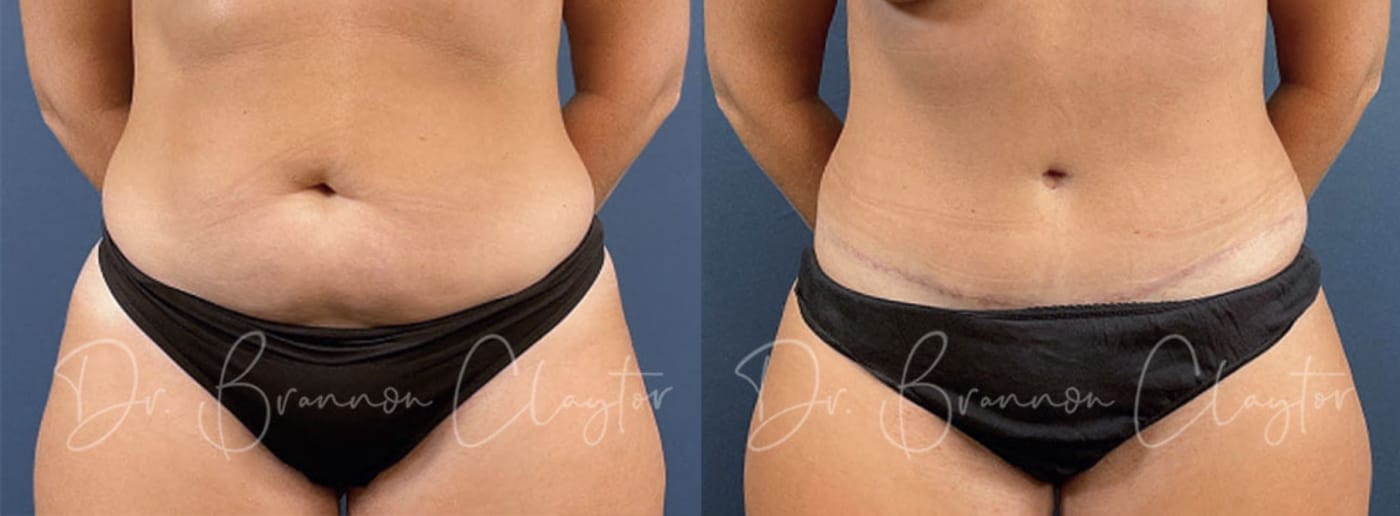
How fast do surgical scars heal?
Scars from plastic surgeries like tummy tuck or facelift continue to diminish in appearance for a full two years, but, importantly, scar tissue takes about 3 months to regain its strength. Furthermore, scars are only about halfway to their ultimate strength level at 6 weeks after surgery; this is when most patients are allowed to resume many activities and when we will likely clear you to get back to your routine, especially if you live a relatively sedentary lifestyle.
While it feels great to get back to normal life, understand that anything more than occasional light stress on your scars at this time could widen them, so, until they reach their full strength after about 3 months, it’s best to avoid any activity that might strain your healing tissues.
Scar maturation can vary based on the procedure, incision placement, and your unique anatomy, so be sure to ask your doctor specific questions you have about what you can and can’t safely do. For example, a facial procedure such as an eyelid lift will have a faster healing time and less restrictions than a body lifting procedure.
What does the scar healing timeline look like?
As stated, scar healing will vary per procedure and person, but here is a general timeline for scar healing after plastic surgery:
- Weeks 1-2: Your incisions are fresh and may look red, raised, or angry. This is completely normal. Focus on keeping the area clean, dry, and protected. Don’t apply any scar treatments yet—your priority is preventing infection and allowing the incision to close properly.
- Weeks 3-6: Once your surgeon confirms your incisions are fully closed and healed, you can start using silicone gel or sheets. Scars may still look prominent, red, or slightly raised. This is the inflammatory phase of healing, and it’s expected.
- Months 2-3: Scars typically look their worst during this period. They may appear thick, dark, or more noticeable than they did initially. Don’t panic—this is a normal part of the maturation process. Continue with sun protection and scar treatments.
- Months 3-6: You’ll start to see noticeable improvement. Scars begin to flatten, fade, and soften. Redness decreases as blood vessels in the scar tissue break down.
- Months 6-12: Scars continue to improve and fade. Most scars reach about 80% of their final appearance by the one-year mark.
- 12-18 months: Final scar maturation. Your scars should be thin, flat, and significantly lighter than the surrounding skin. Some scars may continue improving slightly beyond 18 months.
Patience is essential. Even when scars look worse before they look better, they’re going through a necessary healing process.
What’s the difference between normal and abnormal scarring?
Most scars heal normally and fade over time, but occasionally scarring can be abnormal and require additional treatment.
Normal scarring goes through predictable phases: initial redness and thickness that gradually flattens and fades to a thin, pale line. Normal scars stay within the boundaries of the original incision and improve over 12-18 months.
Hypertrophic scars are thick, raised, and red but stay within the boundaries of the original incision. They develop when the body produces excess collagen during healing. While they look more prominent than normal scars, hypertrophic scars typically improve with treatment like silicone products, steroid injections, or laser therapy.
Keloid scars are raised, thick scars that grow beyond the original incision boundaries. They can continue growing over time and may feel itchy or painful. Keloids are more common in people with darker skin tones and have a genetic component. They’re more challenging to treat than hypertrophic scars and may require steroid injections, surgical removal, or radiation therapy.
Signs of abnormal scarring:
- Scars that continue to grow beyond the incision site
- Excessive thickness or elevation that doesn’t improve after 6 months
- Persistent pain, itching, or tenderness
- Scars that seem to be getting worse rather than better over time
If you notice any of these signs, contact your surgeon. Early intervention with abnormal scarring leads to better outcomes. If you have a history of keloid or hypertrophic scarring, discuss this with your surgeon during your consultation so preventive measures can be taken.
How to help your scar heal to near invisibility
The appearance of your scars have two components: elevation and color, or pigmentation. Achieving the most beautiful results with ultra-fine, near-invisible scars requires several methods to help the scars to heal both flat and as close to your natural skin color as possible. In addition to following your plastic surgeon’s advice for physical activity limits, you can help your scars heal with a few proven methods:
Choose a surgeon who uses carefully-placed incisions
Board-certified plastic surgeons are extensively trained and experienced in surgical methods that lead to aesthetically pleasing outcomes, and scar placement is a key part of this. Plastic surgeons should place incisions in areas where the least natural tension will be placed on the healing scar, helping it to heal normally.
Incorporate a scar gel
A scar gel such as Strataderm™, which we sell in our office, or Mederma, which is available OTC at pharmacies, can be applied routinely to help minimize the appearance of scars.
Prevent hyperpigmented scars with sun protection
It’s critical to protect healing scars from sun exposure, which darkens them: pigment develops during sun exposure as the body’s reaction to protect itself from the ultraviolet (UV) rays.
Use sunscreen, hats, umbrellas, and clothing to protect healing incisions (avoid relying on sunscreen alone). In addition, you may want to consider wearing white, yellow, cream, or other light-colored bathing suits and clothing that deflect the UV light away, as dark colors like black and brown pull the light in.
Practice scar massage if instructed by your surgeon
Some plastic surgeons may recommend that certain patients practice scar massage once their scar reaches a certain point in maturity. When scar massage is called for—and each patient should ask their doctor if scar massage is appropriate for them—it can help to break up hard, raised scar tissue.
Treat early post-surgical scars with microneedling
In addition to the above measures, Dr. Claytor uses either microneedling or Morpheus8 RF microneedling to induce collagen remodeling, helping to improve scars’ appearance by making them flatter and less visible.
Previously, most surgeons believed that it was necessary to wait a full year after surgery before using microneedling to improve surgical scars’ appearance. But Dr. Claytor recently published a study in the journal Plastic And Reconstructive Surgery which found that patients who started a microneedling regimen earlier—as early as 6 weeks after surgery, once the initial healing process was complete—saw significant scar improvement at the four-month mark.
As a surgeon who is well-known for his natural-looking deep plane facelift results, Dr. Claytor is constantly working to improve methods to minimize scar appearance and promote quicker scar maturation. While scars are placed inconspicuously, scar care is still critical to achieving the finest possible scars.
Dr. Claytor’s study found that patients who started a microneedling just 6 weeks after surgery saw significant scar improvement at the four-month mark.
Scar revision surgery
In more severe cases where a scar has healed irregularly, you may decide to consult with a board-certified plastic surgeon about scar revision surgery. Revision surgery is not usually able to create a scar-free result, but a skilled surgeon may be able to improve the scar’s appearance by removing scar tissue and carefully suturing the new incision with techniques to help create a fine scar that heals to be barely perceptible. Of course, it is also key to incorporate scar care during recovery from scar revision surgery.
About Philadelphia plastic surgeon Dr. Brannon ClaytorDr. Claytor is a board-certified plastic surgeon with many years of plastic surgery experience. He has published numerous articles over his career to advance the science and artistry of aesthetic medicine, and he is committed to helping patients see their dream results safely. Dr. Claytor and the outstanding medical team at the Claytor Noone Plastic Surgery invite you to call our office at 610.527.4833 or contact us online to schedule a consultation today!