
Endoscopic Brow Lift: Is It Worth the Hype?
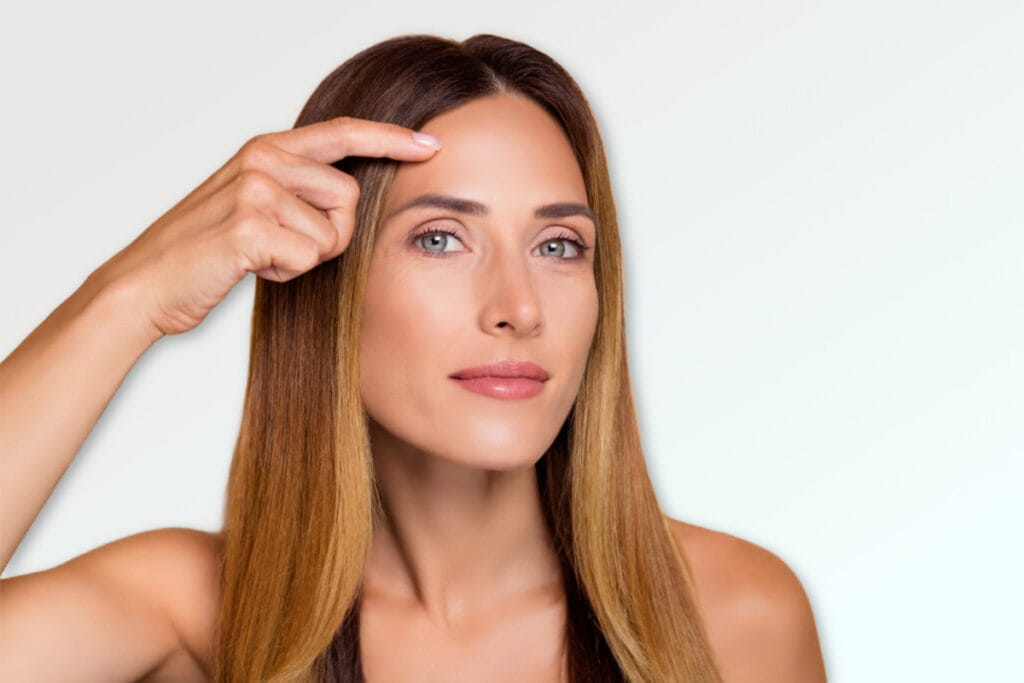
If you’ve been researching ways to address a heavy brow, forehead wrinkles, or that perpetually tired look staring back at you in the mirror, you’ve likely come across the endoscopic brow lift.
Praised as a “minimally invasive” alternative to traditional brow lift surgery, this procedure has been a staple in facial rejuvenation for over 30 years. But with so many options available—from Botox® Cosmetic to thread lifts to traditional surgery—is the endoscopic approach really worth it?
With over 20 years of experience performing facial rejuvenation procedures, Dr. Claytor has seen firsthand what the endoscopic brow lift can and cannot accomplish. Here’s an honest assessment, and how to know if it’s the right choice for you.
What Makes the Endoscopic Brow Lift Different
Traditional brow lift surgery involves a lengthy incision hidden within the hair on the scalp. While effective, this approach leaves a longer scar, carries a higher risk of scalp numbness, and requires a more extensive recovery.
The endoscopic technique, introduced in the 1990s, changed the game by using three to five small incisions (each less than an inch) hidden within the hairline. A tiny camera guides the surgeon’s instruments beneath the skin, allowing for precise tissue repositioning without the dramatic incisions of traditional methods.
Smaller incisions mean less visible scarring, reduced risk of prolonged numbness, and a faster return to normal activities for most patients.
Who Benefits Most from an Endoscopic Brow Lift?
In Dr. Claytor’s experience, the best candidates for endoscopic brow lifting share certain characteristics:
You’re a strong candidate if you:
- Have mild to moderate brow descent causing a tired, sad, or angry appearance
- Notice that your eyebrows have dropped to or below the brow bone
- Experience upper eyelid “hooding” that may be partially caused by brow position
- Have good skin elasticity and reasonable expectations
- Want the most subtle scarring possible
- Have a normal to low hairline
You may need a different approach if you:
- Have severe brow ptosis (sagging) with a significant amount of excess skin
- Have a very high forehead and want to lower your hairline
- Have very thin skin or poor skin elasticity
- Primarily want to address deep forehead rhytids (static wrinkles etched into the skin)
For patients looking for full-face rejuvenation with minimal downtime, the endoscopic brow lift can also be paired with an endoscopic “ponytail” facelift or advanced non-surgical techniques like Dr. Claytor’s LaMiNa (nanofat microneedling with laser skin resurfacing), which addresses fine lines (including those around the mouth) and creates a notably more youthful skin texture and tone.
The Awake Option: A Less-Discussed Advantage
The endoscopic brow lift can be performed under local tumescent anesthesia, which numbs the surgical site, rather than general anesthesia, which puts you to sleep for the procedure.
For appropriate candidates, this “awake” approach offers several benefits:
- Faster recovery and less grogginess
- Reduced anesthesia-related risks
- Ability to go home more quickly
- Often a lower overall cost
Not everyone is a candidate for the awake approach, but it’s worth discussing during your consultation if avoiding general anesthesia is important to you. (If you are also considering a facelift, check out our recent deep-dive into the benefits of an “awake facelift.”)
The Honest Limitations You Should Know
No procedure is perfect for everyone. Here’s what the research—and Dr. Claytor’s own extensive experience—reveals about its limitations:
Longevity debates
One of the most discussed aspects of the endoscopic technique is whether results last as long as traditional methods. The most frequently criticized and debated aspects of the technique are stabilization problems and recurrent brow ptosis (in other words, needing another surgery) in the long term. Still, advances in fixation techniques have significantly improved the longevity of endoscopic results, with most patients enjoying results that last 7-10 years or longer.
Not ideal for severe sagging
The endoscopic approach works best for mild to moderate brow descent. If you have significant drooping or very heavy brows, you may achieve better results with a traditional approach or a combination technique.
Hairline considerations
The endoscopic technique preserves your natural hairline position, which is usually a benefit. However, it is not always ideal for patients with a high hairline position. If you want to lower your hairline, a different approach may be more appropriate.
Some “settling” is normal
In the first few months after surgery, you may notice that your brows settle slightly from their immediate post-operative position. This is expected and accounted for during surgery. The final result typically becomes fully visible around the 3-6 month mark.
What About Sofwave® as a Non-Surgical Alternative?
Another option patients frequently ask about is Sofwave® skin tightening, an FDA-cleared ultrasound treatment that lifts and tightens skin without surgery or needles. Sofwave delivers precise ultrasound energy to the mid-dermis to stimulate collagen production, and it’s specifically cleared for eyebrow lifting.
Where Sofwave shines
Sofwave is completely non-invasive with zero downtime—you can return to normal activities immediately, even apply makeup the same day. It’s safe for all skin types and can be performed in about 30-45 minutes. For patients with early signs of brow descent who want a subtle lift without any recovery period, Sofwave can be an excellent starting point.
Where Sofwave falls short compared to endoscopic brow lift
While Sofwave stimulates collagen and provides gradual tightening over 3-6 months, it cannot physically reposition descended tissues the way surgery can. Results are more subtle (typically a few millimeters of lift) and temporary, lasting approximately 12-18 months before maintenance treatments are needed. For patients with moderate to significant brow ptosis, the degree of correction Sofwave provides may not be sufficient to achieve their goals.
The bottom lineSofwave is ideal for patients in their late 30s to early 50s who are noticing mild laxity and want to delay surgery, or for those who want to maintain results after a surgical brow lift. If you have noticeable brow descent that’s causing hooding over your eyes or a perpetually tired appearance, the endoscopic brow lift will deliver more dramatic, longer-lasting results. Some patients choose to start with Sofwave to “test” the concept of a lifted brow before committing to surgery, which is a perfectly reasonable approach if you have realistic expectations.
The Honest Verdict: Is It Worth the Hype?
After performing hundreds of facial rejuvenation procedures, here’s Dr. Claytor’s perspective: the endoscopic brow lift absolutely lives up to its reputation for the right patient.
The key word is “right.” This procedure delivers exceptional results when used for its intended purpose, which is correcting mild to moderate brow descent in patients who value minimal scarring and faster recovery.
Where the endoscopic brow lift truly shines is in creating natural-looking rejuvenation that doesn’t scream “I had surgery.” Patients look refreshed, more awake, and like themselves, but without the heaviness and fatigue that aging had imposed on their upper face.
If you’re considering this procedure, the most important step is an honest evaluation with a board-certified plastic surgeon who performs multiple types of brow lifts. With a trusted plastic surgeon, the goal is never to sell you on a particular technique, but to identify the approach that will give you the best possible outcome for your unique anatomy and goals.
Dr. R. Brannon Claytor is a board-certified plastic surgeon and Castle Connolly Top Doctor specializing in advanced techniques to minimize downtime and optimize patient outcomes. He operates out of a private, Quad-A accredited surgical suite in Bryn Mawr. We invite you to schedule a consultation to learn more about your options.
References
Panella NJ, Wallin JL, Goldman ND. Patient outcomes, satisfaction, and improvement in headaches after endoscopic brow-lift. JAMA Facial Plast Surg. 2013 Jul-Aug;15(4):263-7. doi: 10.1001/jamafacial.2013.924. PMID: 23699709.
Raggio BS, Winters R. Endoscopic Brow Lift. [Updated 2025 Jun 19]. In: StatPearls [Internet]. Treasure Island (FL): StatPearls Publishing; 2025 Jan-. Available from: https://www.ncbi.nlm.nih.gov/books/NBK545220/
Serhat Şibar, Asiye Uğraş Dikmen, Ayhan Işık Erdal, Long-term Stability in Endoscopic Brow Lift: A Systematic Review and Meta-Analysis of the Literature, Aesthetic Surgery Journal, Volume 45, Issue 3, March 2025, Pages 232–240, https://doi.org/10.1093/asj/sjae225
Brow lifts vs Botox: Do you need one or both?. American Society of Plastic Surgeons.