
6 Things You Need to Know About Your Skin on GLP-1 Medications
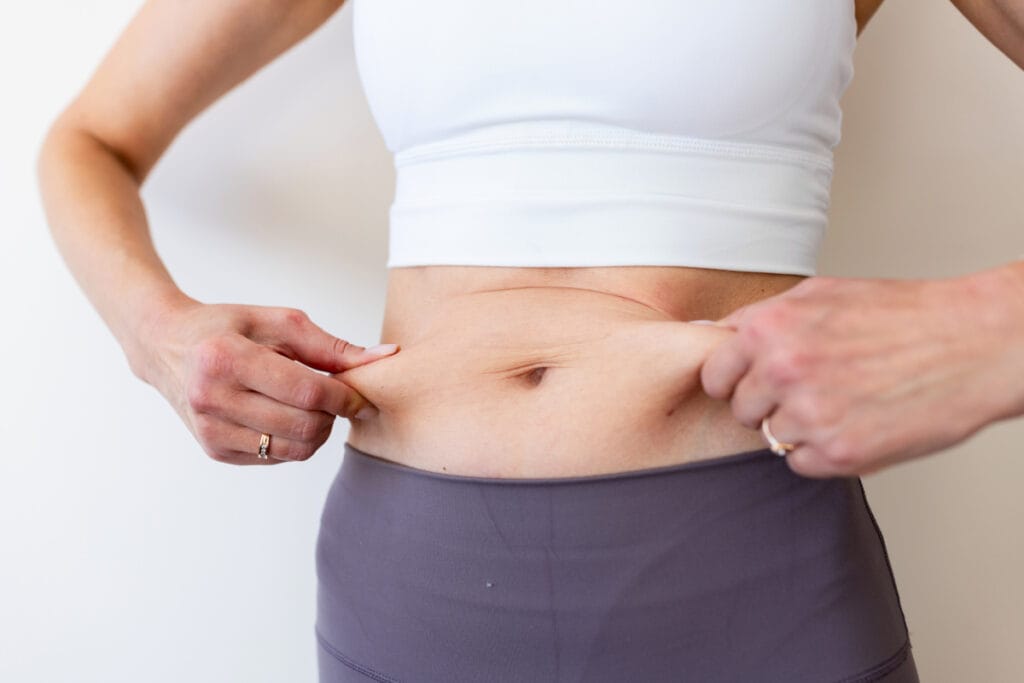
GLP-1 medications have transformed weight loss for millions of people. These medications often help patients lose 15-25% of their body weight in a relatively short period, and in our plastic surgery practice, we’ve seen many patients using them to help reach their goal weight before surgery.
But many people don’t realize until several months into their weight loss journey that quick weight loss affects the skin dramatically. Sagging in areas like the face, arms, and thighs can make you feel that you look older—not healthier.
Here is what you need to know about your skin on GLP-1 medications, and the options you have to address unwanted excess skin.
1. “Ozempic Face” Isn’t Unique to GLP-1s
The term “Ozempic face” describes the facial changes that accompany rapid weight loss, but this phenomenon isn’t caused by any specific medication. Rather, it’s a consequence of losing fat quickly from an area where fat provides essential structural support.
Facial fat exists in distinct compartments that give the face its youthful contours. When these compartments lose volume rapidly, cheeks hollow out, temples become pronounced, and skin around the jawline begins to sag. The overall effect can make someone look tired or older than before.
2. You’re Losing More Than Fat—You’re Losing Muscle, Too
Studies show that 20-40% (and in some cases up to 60%) of the weight lost on GLP-1 medications is lean muscle mass rather than fat. The face alone contains around 30 muscles on each side. When these lose tone along with the facial fat pads, it accelerates the appearance of facial aging.
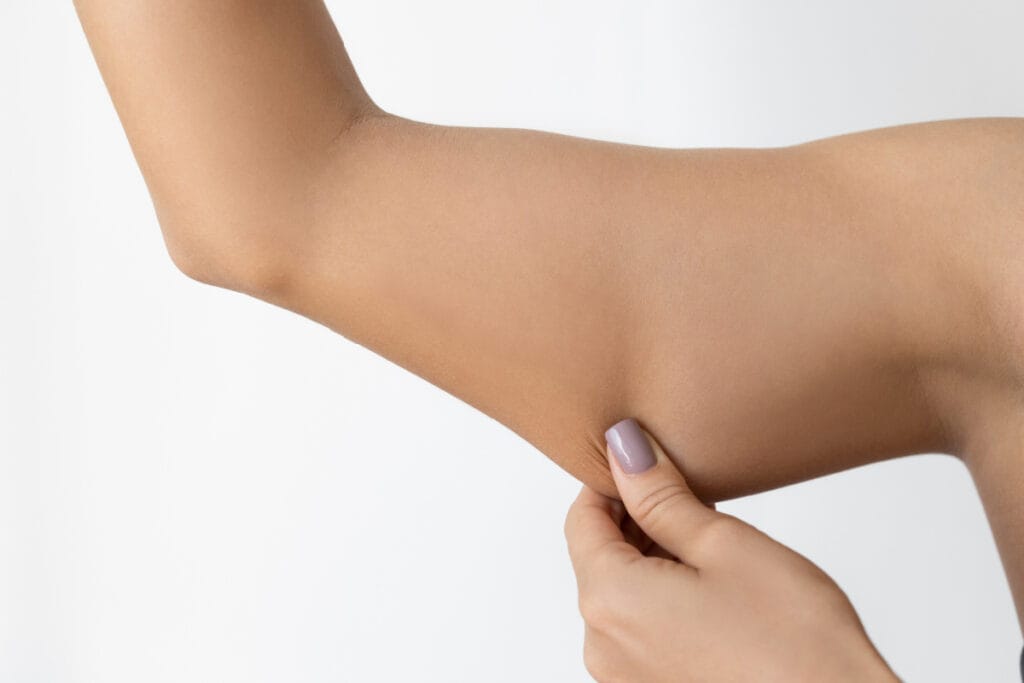
On the body, the combination of muscle and fat loss leaves skin without adequate support—which is why many people notice sagging in the arms, abdomen, and thighs even at their goal weight.
3. Your Skin Has a Limit to How Fast It Can Adapt
Skin is remarkably resilient, but it has biological limits. It relies on two key proteins—collagen and elastin—to maintain its structure and bounce-back ability. As we age, production of these proteins naturally declines. When you add rapid weight loss to the equation, you’re asking skin to adapt faster than it biologically can. Skin feels thinner, less elastic, and more prone to wrinkling. Many patients notice a crepe-like texture developing, particularly on the arms, neck, and abdomen.
4. Age and Genetics Determine How Much Your Skin Will Respond
Two people can lose the same weight at the same rate and have dramatically different outcomes. Younger patients typically have more collagen reserves, giving skin greater capacity to contract after fat loss. The total amount lost and the speed of loss also matter—someone who loses 50+ pounds in a year will likely see more skin changes than someone who loses 20. Sun damage, smoking, and hydration also play a role.
5. Hydration and Protein Intake Can Help
GLP-1 medications suppress appetite, which helps with weight loss but can lead to inadequate protein intake—the building block your body needs for muscle mass and skin health. Experts recommend GLP-1 patients consume 0.8-1.5 grams of protein per kilogram of body weight daily, aiming for 20-30 grams per meal. Good sources include lean meats, fish, eggs, legumes, and dairy. Without adequate protein, muscle loss accelerates, and your body has fewer resources to support skin structure.
Similarly, hydration also matters: collagen requires water to function, and dehydrated skin shows texture changes more prominently. Lifestyle adjustments like these are worth making in order to help minimize changes, even if they typically aren’t enough on their own to prevent issues entirely in patients with rapid or significant weight loss.
6. Non-Surgical, Zero Downtime Treatment with Sofwave Tightens Skin
The aesthetic medicine field has developed non-surgical solutions specifically for the types of skin changes that are common with GLP-1 weight loss. Board certified plastic surgeon Dr. Brannon Claytor is proud to offer Sofwave™ skin tightening to weight loss patients who are looking to improve mild to moderate skin laxity without surgery.
Our go-to treatment for this purpose, Sofwave is non-invasive and can be used head to toe for firmer, more youthful-looking skin. Using FDA-cleared ultrasound technology, Sofwave stimulates collagen and elastin production in the mid-dermis—the layer of skin responsible for firmness and structure. Unlike older technologies that can cause discomfort or risk affecting facial fat, Sofwave delivers energy at a precise 1.5mm depth with integrated cooling to protect the skin surface.
What makes Sofwave particularly relevant for GLP-1 patients is its ability to address skin laxity across multiple areas: the face, neck, jawline, arms, abdomen, and thighs. Treatment takes 45-60 minutes with virtually no downtime, so you can return to normal activities immediately. Results develop gradually over 2-3 months as new collagen forms, and they continue to improve for up to six months.
This treatment can be started even when you are still actively taking GLP-1 medications.
Curious about surgical skin tightening? Read our blog: Your Options for Sagging Skin After Ozempic Weight Loss
Treatments like Sofwave are worth discussing whenever you feel you are ready, and at Claytor Noone Plastic Surgery, we are uniquely positioned to work with patients who want to consider all options—surgical skin tightening like the facelift, arm lift, thigh lift, or body lift and non-surgical treatments—to help you make an informed decision. Whether you’re just starting your medication, months into your journey, or dealing with loose skin after reaching your goal weight, we can help you determine which treatments could be right for you.
To learn more or schedule a consultation, contact our office at 610-527-4833 or book a med spa appointment online.